
How to prepare for a UT career fair
Show up to your next career fair prepared.
According to recent career outcomes data, UT students who attended career fairs had a higher chance of getting job offers and accepted higher starting salaries than students who did not. Preparing ahead of time makes the difference. This page walks you through three moves: get ready before the fair, work the room while you’re there, and follow up afterward. The same workflow applies to in-person and virtual fairs, with a few extra notes for the virtual format.
You’ll leave with a clear pre-fair checklist, a plan for the day itself, virtual-fair-specific tips, and a follow-up approach that turns a 60-second handshake into a real conversation.
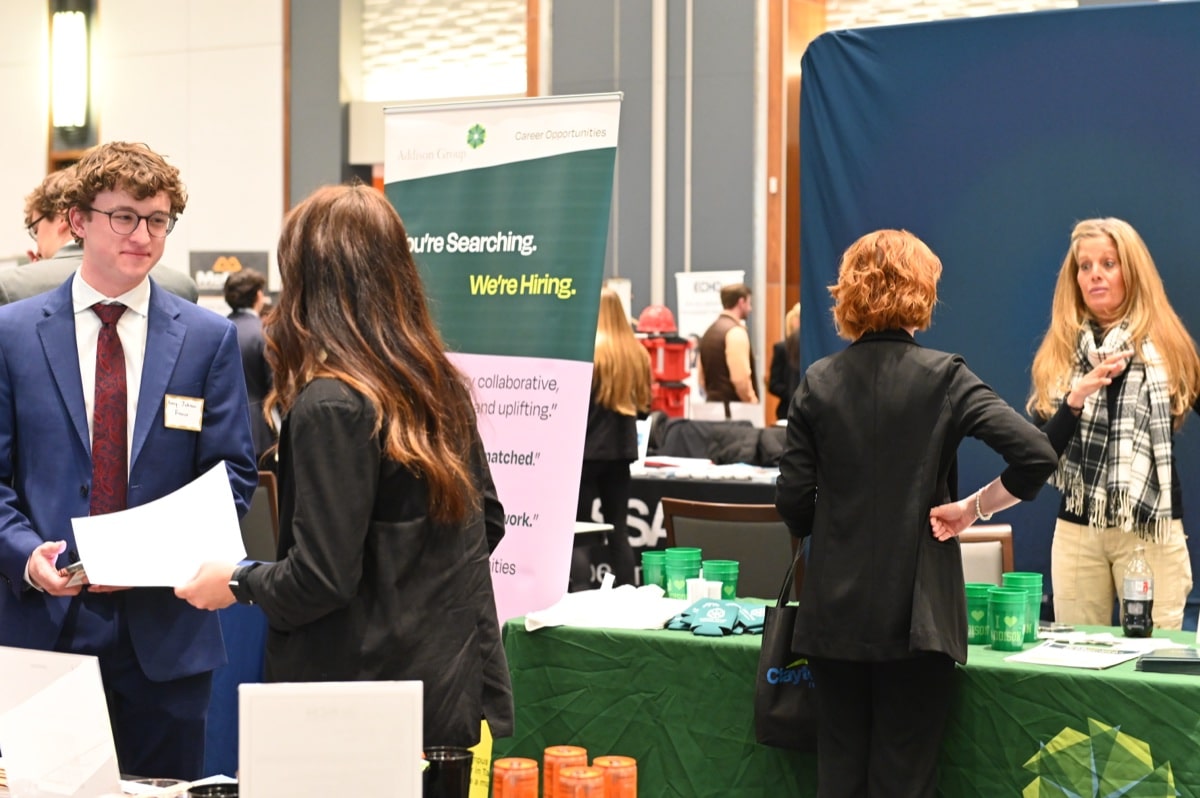
Upcoming fairs at UT
UT hosts a variety of career fairs each semester, including all-majors, college-specific, and virtual events. You can view the full schedule in Handshake by signing in with your UT NetID, filtering for career fairs, and registering for the events that match your academic background, career goals, and interests.
View all upcoming fairs on Handshake
- All-majors fairs. Held each fall and spring, these welcome students from every major. Recurring examples include Business/Hospitality/Government, Engineering/STEM/Healthcare, Creative Arts/Social Sciences, the Part-Time Job Fair, and the SEC & ACC Virtual Career Fair.
- College-specific fairs. Architecture + Design, Construction Science, Engineering Expo, Herbert College of Agriculture, Meet the Firms (Accounting), and Health and Human Sciences each host their own targeted fair. They work the same way; check Handshake for dates.
- Specialty events. The STEM Expo, which combines engineering and STEM employers and is hosted in partnership with the Engineering Professional Practice office at the Knoxville Convention Center, and the Career Connections Networking Mingles, a smaller no-booth networking format, are great if you want something less crowded than a major fair.
Before the fair: how to prep
Going into a career fair without preparation can mean missing valuable opportunities. Spending a couple of hours beforehand, researching participating employers, rehearsing your elevator pitch, and getting your resume ready, turns a brief booth conversation into a real introduction. The more prepared you are, the easier it is to make a strong impression.
- Research the employers attending the fair on Handshake. Search the fair’s employer list to learn about the positions they’re hiring for, the qualities they’re looking for, and general company information. Make a short list of three to five must-talk-to employers and a backup list of five more.
- Make a list of questions you might want to ask each employer. Specific is better than generic. “What does success look like in the first 90 days?” beats “What is it like to work here?”
- Get your resume reviewed and print several copies on resume paper. Drop in for a resume review or schedule a coach appointment a few days before the fair.
- Update your Handshake and LinkedIn profiles. Recruiters often look people up after meeting them, so make sure they find a current, professional online presence.
- Practice your elevator pitch. In 30 to 60 seconds, cover your name, year, major, what you’re looking for, and one specific thing that makes you a fit. Rehearse it out loud, because saying it in your head doesn’t count.
- Pick out a business casual or business professional outfit. If you’re unsure what works at UT, review our professional clothing options.
During the fair: working the room
Once you arrive at the fair, success depends on balancing meaningful conversations with getting around the room efficiently. The checklist below covers both.
- Check in and make a nametag.
- Plan a route by reviewing the fair map or employer locations. Identify the employers on your must-talk-to list and the order you’ll hit them in.
- Take a lap around the fair first. Use the first few minutes to ease into the room before going up to your highest-priority employers. It lowers nerves and lets you see who’s there.
- Introduce yourself with confidence and authenticity. Employers are at the fair to meet students, and they want to talk.
- Hand over a resume, ask the questions you prepared, and actively listen to the recruiter.
- Stay organized. Jot down notes, recruiter names, and follow-up instructions. A small notebook or notes app is essential; remembering 10 conversations from a two-hour fair without notes is a losing battle.
- Collect business cards when offered.
- Maintain an open mind. Some of the best opportunities come from conversations with employers you didn’t originally plan to visit.
Virtual career fairs
Virtual career fairs are a regular part of UT’s recruiting calendar, with the SEC & ACC Virtual Career Fair serving as one of the largest annual events. Many industry and specialty fairs also offer virtual participation. The core strategy is the same, prepare beforehand, engage with employers during the event, and follow up afterward, but virtual fairs take a few extra steps to maximize your visibility.
Sign up for employer sessions before the fair starts
Most virtual fairs on Handshake let you sign up for one-on-one chats or group sessions with specific employers before the fair begins, and sign-ups go fast. View the employer list as soon as it’s posted, and sign up for sessions with your target employers right away.
Test the tech
Make sure your microphone and webcam work, and test your internet connection. Use an up-to-date version of Chrome or Firefox. Save your resume as a PDF on your desktop so it’s easy to grab if a recruiter asks for it, and keep headphones nearby for clearer audio.
Set up a clean background and dress professionally on camera
If you’re using video chat, dress in business casual or business professional from the waist up at minimum. Keep your background clean and clutter-free, or use a virtual background if you need one. Tell roommates or family your schedule so they can avoid interruptions, and skip emojis and chat-speak in any chat windows.
After the fair: follow up
The difference between a brief interaction and a meaningful opportunity is often the follow-up. Within 24 hours of the fair, send a short message to each recruiter you spoke with. The conversations that get follow-up are the ones that turn into interviews.
- Send a thank-you email or LinkedIn message to recruiters from target companies within 24 hours. Keep it short, three or four sentences. Thank them for the conversation, mention one specific thing you discussed, and reiterate your interest in the role.
- Connect with recruiters on LinkedIn. Include a one-line personalized note in the connection request, for example, “Great to connect at the Engineering Expo. Looking forward to staying in touch.”
- Apply for any positions according to the instructions the recruiter gave. Some companies want you to apply through Handshake, others through their own system, and some forward your resume directly. Follow what each recruiter said.
- Add any interviews to your calendar and confirm the details: time, location or video link, interviewer name, and any prep materials.
Take the checklist with you
Print the one-page Career Fair Checklist before the fair and check items off as you go: research employers, rehearse your pitch, pack your resume copies, and send your follow-ups.
Career Fair Checklist
A printable one-page cheat sheet covering everything from employer research to follow-up.
Do this next
Career fairs reward students who go in prepared. If you have a fair coming up in the next two weeks, review your resume with a Peer Career Advisor or a career coach, rehearse your elevator pitch with someone who’ll give honest feedback, and confirm your fair registration on Handshake.
View upcoming fairs on Handshake
Keep exploring Jobs & Internships
Got a fair coming up? Talk to a coach
A career coach can run a mock conversation with you, review your resume one more time before the fair, and help you prepare employer-specific questions. Most students start with a single 30-minute appointment in the week leading up to a fair.
Career Coaching & Education
Center for Career Development & Academic Exploration
201 Student Union, 1502 Cumberland Ave, Knoxville, TN 37996
865-974-5435